Age-related body-image distress
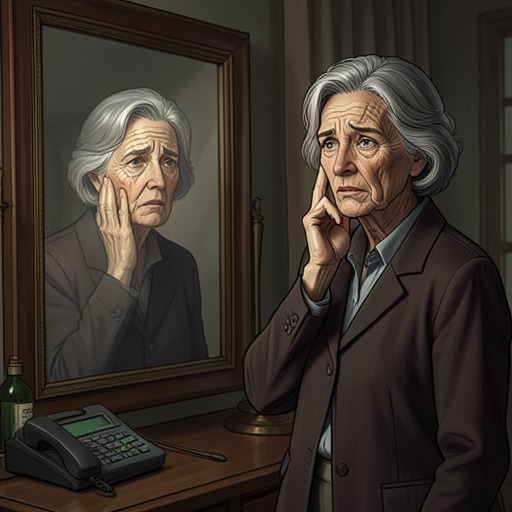
What Are You Going ThroughAge-related body-image distress in these episodes is more than dissatisfaction with weight or a wish to look younger: it is a painful reorientation of daily life around a body that seems to have changed beyond a woman’s control, and around the social attention that appearance once brought. The gym-goer measures herself against a remembered, admired body and withdraws from activities she used to enjoy; an older woman describes the fading of beauty as the fading of recognition, desirability, and even the self she understood herself to be. Together, their accounts trace how aging becomes both bodily experience and social judgment.
The body under scrutiny
The woman encountered in the gym locker room is middle-aged, toned from working out but overweight, with features that have softened and a former dazzle that has diminished. The change is not described as drastic, yet she feels it intensely. She sits hunched among towels, resentful of the bright locker-room lights and distressed by the mirrors. The narrator can ignore the mirrors; the woman cannot. That difference makes visible how an ordinary shared space can become an ordeal when the body is experienced chiefly as something to inspect and condemn.
Her efforts have not produced the result she wants. She exercises every day and watches what she eats, but still gains weight; she says she now eats half as much as before and must eat less each year merely to avoid becoming much heavier. She imagines that soon she will be reduced to a carrot and a hard-boiled egg each day. The restriction is not presented as an abstract concern: hunger feels like a rat trying to gnaw its way out of her stomach, and at night it can keep her awake. The body she is trying to discipline answers with persistent physical pain rather than reassurance or control.
Her comparison with her sister sharpens the distress. When her sister had cancer and lost thirty pounds, the woman found herself wishing that the same thing would happen to her. She recognizes the wish as troubling, but explains it through the lasting depression of hating her appearance and continually fighting her own body. Her sister has since recovered, a fact that complicates the comparison without making the wish less revealing: weight loss associated with illness has become, in the woman’s imagination, preferable to the daily struggle of living in a body she cannot accept.
Lost pleasures and public shame
Clothes shopping, once a source of joy, has become a punishment. When she needs trousers or a dress, she may have to try on a hundred items before finding something that fits. Each attempt requires another confrontation with the mirror. As she recounts it, she grits her teeth, recalling not only the pleasure of her former appearance but the exhilaration she once felt in admiring her body. The distress therefore includes grief for an earlier relation to herself: she remembers being able to take pleasure in her appearance, while the present-day fitting room makes looking a repeated act of endurance.
Her attention narrows to particular parts of her body. She says that her back view is the worst and that she no longer wears anything that does not cover her buttocks. The rule she imposes on clothing follows her beyond the locker room: the beach, swimming, and tanning used to be enjoyable, but she will not appear in public in a swimsuit or even wear shorts. Heat does not persuade her to uncover. Nor, she says, would becoming thin again make her willing to show her body in public. The restriction has outlasted the possibility of changing the feature that first provoked it.
Her judgment of other women reveals how thoroughly she has internalized the shame she fears. She knows she does not look worse than most women her age and believes that she looks better than many, yet cannot understand how other women can appear nearly naked without self-consciousness. Seeing a woman on the beach whose thighs or belly she considers unattractive makes her turn away. The woman’s fear is not simply that she will dislike her own appearance; she would rather die than give another person a reason to look at her with the same contempt. Her voice carries horror, bitterness, and pain, as if aging has imposed a cruel bargain between being seen and being shamed.
Beauty and the loss of attention
A second account comes from an elderly woman who was once very beautiful. She describes appearance as especially consequential for women because it shapes who they are understood to be and how others treat them. When a woman is considered beautiful, she may grow accustomed to admiration from acquaintances and strangers, compliments, invitations, gifts, and people wanting her company. The attention can feel like ordinary life rather than privilege. Its disappearance is gradual: heads stop turning, and people met in passing do not later remember her face. What replaces the admired woman is, in her account, an ordinary and forgettable person.
This change complicates the apparent freedom from unwanted attention. The older woman remembers young women complaining about leering and catcalls and understands their dislike because she once felt it herself. But she doubts that many will later celebrate never receiving that attention again. She compares the transition to menopause: relief from an unwanted burden does not mean that the first sign of its ending is welcomed. The contrast does not erase the harm of harassment. It shows instead that the same social system can make attention intrusive when it arrives and make its absence feel like evidence of having lost value.
The loss also unsettles the woman’s sense of social competence. After reaching a certain age, she feels as though she has entered a bad dream in which familiar people no longer recognize her. People no longer seek her out or readily try to befriend her as they once did. Because she had not previously needed to work at being liked and admired, she suddenly feels shy and socially awkward. She becomes paranoid, wondering whether efforts to win others’ approval have made her the very sort of person they will reject. Aging changes not only the attention she receives but her expectations about how to move among other people.
Intimacy, guilt, and withdrawal
A small remark intensifies that uncertainty. The older woman overhears a friend of her son describe her as weird. She never discovers exactly what the girl meant, but the comment precipitates a crisis. She begins withdrawing socially, although she continues going to work and caring for her family. She socializes less, stops wearing makeup, and stops coloring her gray hair. These decisions accompany her retreat; the account does not reduce them to a single motive or present them as proof that she has stopped caring. It shows how a passing judgment can lodge in a life already made precarious by the loss of familiar forms of recognition.
Her account of marriage makes the gendered stakes more intimate. She feels guilty for growing older and losing her looks, as though she has disappointed other people. She believes her husband’s disappointment was apparent even though he never stated it outright. When he cheats, she understands her failure to make herself look better, meaning younger, as something he used to justify the affair. Her mother, a former model, had warned that her appearance mattered to the marriage. The older woman acknowledges that her beauty had been an important part of why her husband married her and what he loved; she also recognizes the painful consequence of that attachment when the young woman he married is no longer there.
Her husband leaves her for someone who, friends point out in an effort to comfort her, resembles the woman she had been twenty years earlier. They predict that she will meet a man who loves her for herself, but she never does. The reassurance cannot undo the evidence she sees in her marriage, and the repeated appeal to a future partner does not restore the life that has ended. Her sense of loss reaches beyond romantic desirability: she feels that she herself died years ago and has lived as a ghost ever since, mourning a former self that love for her children and grandchildren cannot replace.
The cost of an appearance-based self
The two accounts distinguish bodily dissatisfaction from the larger distress that can gather around it. The gym-goer’s daily exercise and increasingly restricted eating do not free her from judgment; they become part of a painful cycle in which effort, hunger, mirrors, and avoidance renew attention to her body. The older woman’s story shows a different trajectory: even without describing the same weight struggle, she experiences the loss of beauty as a change in other people’s conduct and, eventually, in her own capacity to feel socially at home. One woman avoids swimsuits and shopping; the other withdraws from social life and mourns the self that once attracted attention.
Neither account treats these feelings as shallow simply because appearance is involved. Their suffering is bound to practical circumstances—trying on clothes, enduring hunger, encountering mirrors, hearing a social judgment, or discovering a husband’s infidelity—and to a culture in which women can be made to experience beauty as a source of love and its loss as a personal failure. The accounts do not offer a simple remedy. Instead, their concrete details show how the demand to monitor and preserve appearance can persist even when its rewards are uncertain, and how aging may be lived not as one change but as a series of altered permissions, relationships, and recognitions.